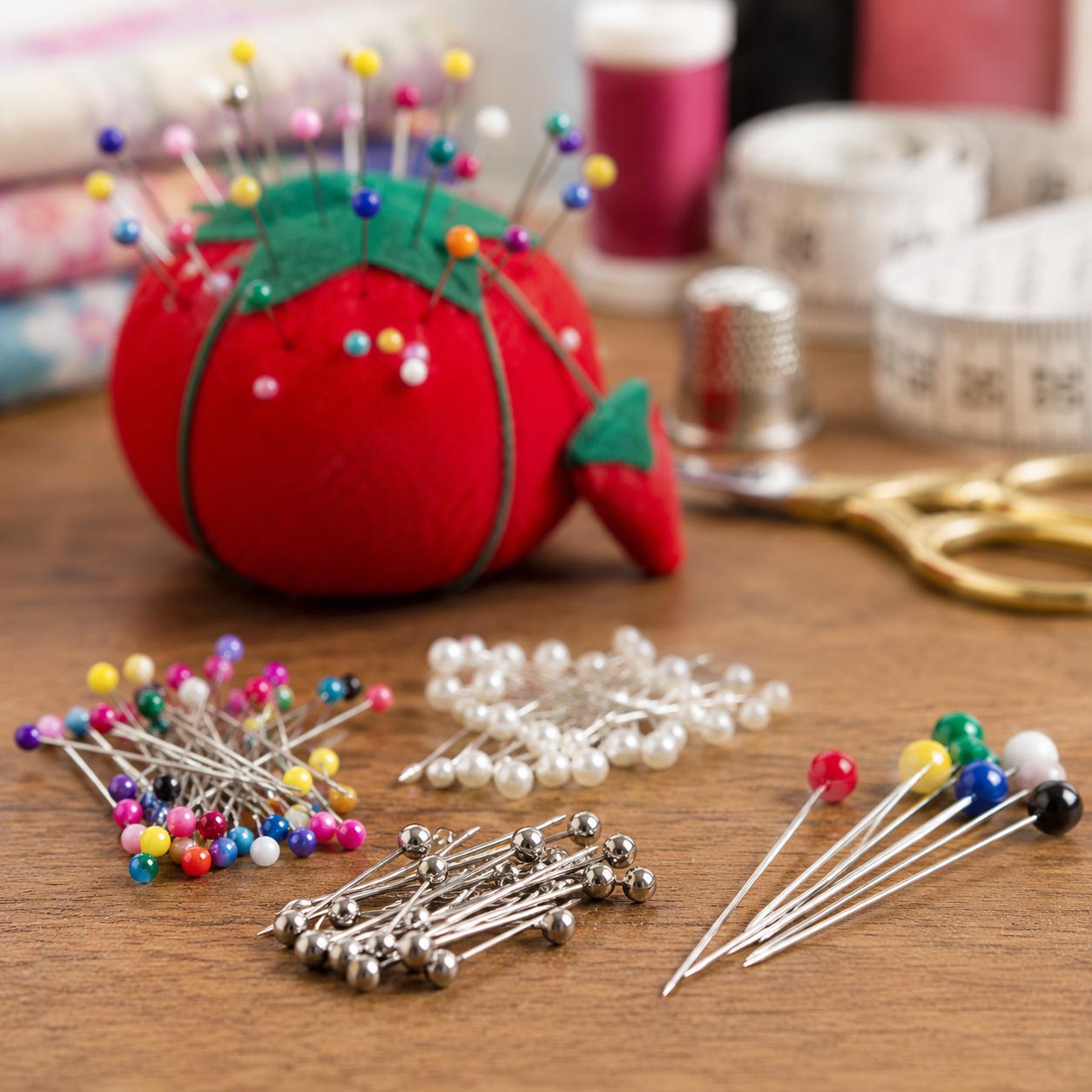
Ball head pins are useful sewing and craft pins with rounded heads that make them easy to see, grip, and remove during sewing, quilting, and craft projects. The larger head is especially helpful when working with fabric layers, patterns, trims, and craft materials because it is less likely to disappear into the project than a tiny flat pin head.
These pins are commonly used for sewing, quilting, alterations, fabric crafts, pattern placement, and general craft room tasks. They are available in different lengths, thicknesses, and head materials, including plastic and glass. Plastic ball head pins are colorful and easy to spot, while glass head pins are often preferred when ironing or pressing is involved because they are more heat resistant.
Ball head pins are straight pins with a round ball-shaped head attached to one end. They are designed to temporarily hold fabric, ribbon, lace, patterns, and other materials in place while sewing, cutting, measuring, or assembling a project.
They are especially useful for garment sewing, quilting, doll clothes, fabric crafts, home d�cor projects, appliqu�, and general craft work. The round heads make them easier to pick up and remove, which can be helpful when working with many pins at once.
When choosing ball head pins, consider the fabric and project type. Fine fabrics usually need thinner pins, while heavier fabrics may require longer or stronger pins. Plastic heads should not be pressed with a hot iron, while glass head pins are a better choice for projects that need heat pressing.
Ball head pins are straight sewing and craft pins with rounded heads that make them easy to see, grip, and remove. This reference guide explains common types of ball head pins, including plastic head pins, glass head pins, long pins, and fine pins, along with their typical uses in sewing, quilting, fabric crafts, and general craft projects.
Ball Head Pins
Ball head pins are straight pins with round heads made from plastic, glass, or another material. The larger head makes them easy to see, grip, and remove.
They are popular for general sewing, quilting, crafts, alterations, and fabric layouts. The colorful heads can also make it easier to find dropped pins or mark different sections of a project.
Plastic ball head pins should not be ironed directly because the heads may melt. Glass head pins are a better choice when heat resistance is needed.
Ball head pins are available in many lengths and thicknesses, so choose a pin that matches the weight and delicacy of the fabric being used.
Ball Head Pins Reference Chart
Ball head pins are available in several styles and are used for many sewing, quilting, and craft projects. The chart below compares common types and their typical uses.
| Pin Type |
Description |
Common Uses |
Helpful Notes |
| Plastic Ball Head Pins |
Straight pins with colorful plastic round heads. |
General sewing, crafts, fabric layouts, pattern placement. |
Easy to see, but should not be ironed directly because the heads may melt. |
| Glass Head Pins |
Straight pins with glass round heads. |
Sewing, quilting, pressing, garment construction. |
More heat resistant than plastic head pins and useful when ironing is needed. |
| Long Ball Head Pins |
Longer pins with easy-to-grip round heads. |
Quilting, layered fabrics, thick materials, craft projects. |
Helpful when working through several layers or bulkier fabric. |
| Fine Ball Head Pins |
Thinner pins with small round heads. |
Lightweight fabrics, delicate sewing, detailed work. |
Less likely to leave large holes in fine fabric. |
Choose ball head pins based on fabric weight, project type, and whether the pinned area will be pressed with an iron. Use glass head pins when heat resistance is important.