Corsage Pins
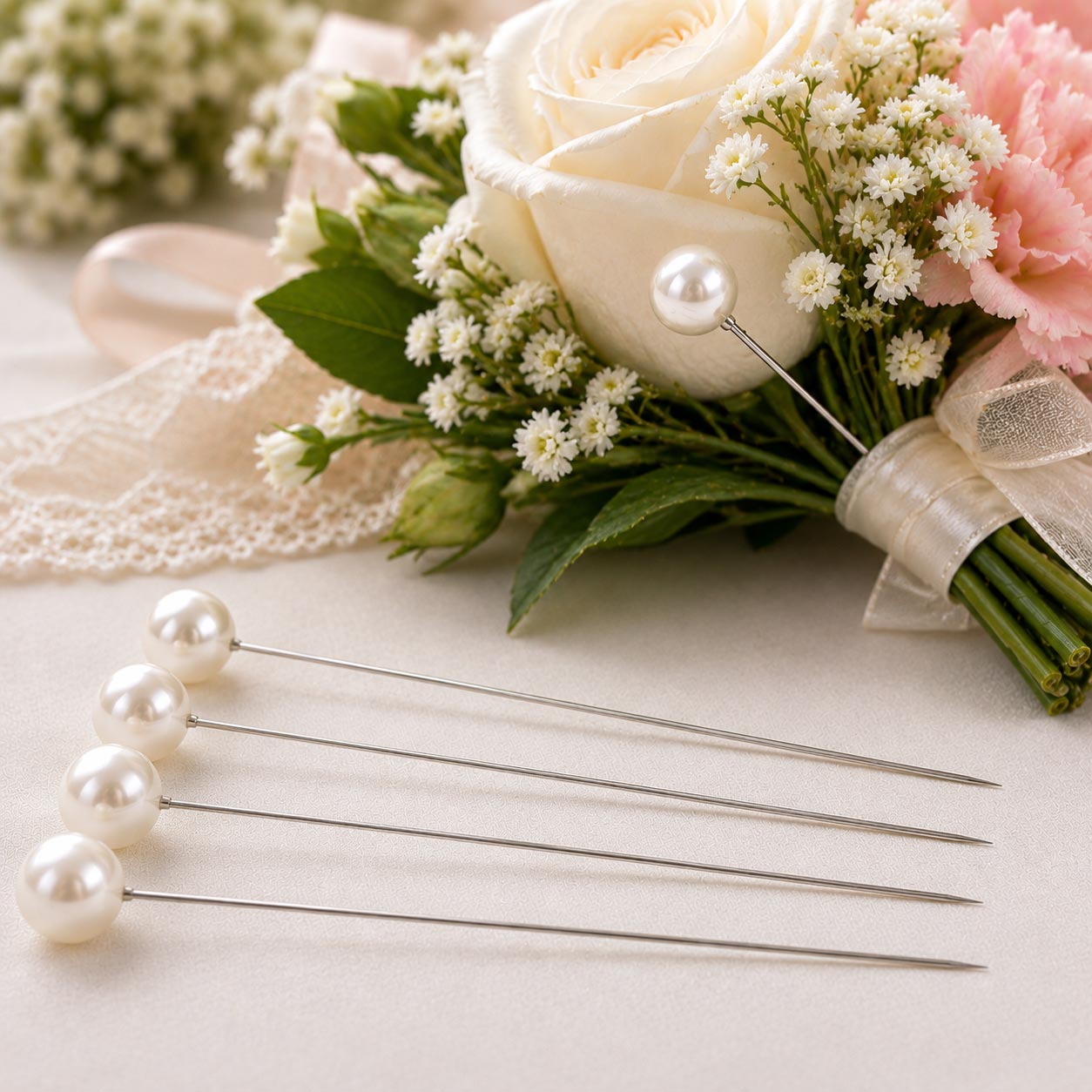
Corsage pins are long, slender steel pins designed to securely hold flowers, ribbon, lace, bows, greenery, and decorative accents together when creating corsages, boutonnieres, floral arrangements, and other decorative projects. Their extra length allows them to pass through multiple layers of delicate materials while remaining almost invisible in the finished design. Unlike ordinary straight pins, corsage pins are longer, stronger, and are often topped with decorative pearl or metallic heads that make them easier to handle while adding an attractive finishing touch.
Although they are most commonly associated with weddings, proms, and other formal occasions, corsage pins are also popular in many types of crafts. They are frequently used in floral arranging, ribbon work, holiday decorations, fabric crafts, wreath making, doll making, and decorative displays whenever a long, temporary fastening pin is needed.
What Are Corsage Pins Used For?
- Assemble fresh flower corsages.
- Create boutonnieres.
- Secure floral stems together.
- Attach ribbon, bows, lace, and decorative accents.
- Hold silk and dried flowers in place.
- Position materials while floral tape or adhesive is applied.
- Fasten flowers to foam, fabric, or decorative bases.
- Create wedding, prom, holiday, and special event decorations.
Because the pin is very thin, it causes minimal damage to flower stems while providing excellent holding power.
Common Types of Corsage Pins
| Style | Description | Common Uses |
|---|---|---|
| Pearl Head | Decorative pearl-like head available in many colors. | Weddings, corsages, boutonnieres, floral crafts. |
| Metallic Head | Smooth metallic finish in gold, silver, brass, or colored finishes. | Floral design and decorative crafts. |
| Colored Ball Head | Brightly colored plastic or glass-look head. | Color coding, floral arranging, sewing, displays. |
| Decorative Heads | Rhinestones, crystals, decorative shapes, or novelty designs. | Wedding and specialty floral work. |
Typical Sizes
| Pin Length | Common Uses |
|---|---|
| 1½ inches | Small bows and lightweight floral accents. |
| 2 inches | Standard corsages and boutonnieres. |
| 2½ inches | Larger floral arrangements and ribbon work. |
| 3 inches | Thick bouquets and layered floral designs. |
Longer pins provide greater holding power when working with thicker materials.
Materials
- Nickel-plated steel
- Stainless steel
- Brass
- Decorative coated steel
The heads may be made from:
- Plastic pearl
- Glass-look pearl
- Metallic finishes
- Colored enamel
- Rhinestones or crystals
Advantages of Corsage Pins
- Long enough to pass through multiple layers.
- Sharp points for easy insertion.
- Thin shafts minimize damage to delicate flowers.
- Decorative heads improve appearance.
- Easy to remove if adjustments are needed.
- Available in many colors to coordinate with flowers and ribbon.
Helpful Tips
- Insert the pin at a slight angle rather than straight through for a more secure hold.
- Hide the point inside the arrangement whenever possible.
- Match the pearl or metallic head color to the ribbon or flowers for a more polished appearance.
- Multiple shorter pins often provide a stronger hold than a single long pin.
- Store unused pins in a pin cushion or sealed container to prevent loss and protect the sharp points.
Did You Know?
Many people assume corsage pins are used only to attach a corsage to clothing. In reality, they are primarily used during the construction of the corsage itself. Once the floral design has been assembled, additional pins may be used to attach the finished corsage to a dress, jacket, or sash.
Pearl-headed corsage pins became especially popular during the mid-1900s because the elegant pearl heads complemented formal attire while making the pins easier to locate and handle during floral assembly.
History
The tradition of wearing flowers dates back thousands of years, but the modern corsage became especially popular during the Victorian era when flowers were used to communicate emotions and sentiments. By the early 1900s, corsages and boutonnieres had become standard accessories for weddings, dances, graduations, and formal events.
As floral arranging techniques evolved, longer specialty pins were developed specifically for assembling delicate floral pieces. Decorative pearl-headed corsage pins soon became the industry standard because they combined functionality with elegance. Today, they remain one of the most widely used tools by florists and floral designers around the world.