Crochet Hooks
Crochet hooks are tools with a shaped hook at one end that are used to pull loops of yarn, thread, or other material through previous loops to create crochet stitches. Although a crochet hook may seem simple, the size, shape, material, and handle style can make a noticeable difference in how a project feels while you work and how the finished stitches look.
Choosing the right crochet hook depends on the yarn or material being used, the stitch pattern, the desired gauge, and personal comfort. A smaller hook usually creates tighter stitches, while a larger hook creates looser stitches with more drape. Patterns often recommend a hook size, but crocheters may need to adjust up or down to match gauge or achieve the look they want.
Common Crochet Hook Materials
| Material | Features | Common Uses |
|---|---|---|
| Aluminum | Lightweight, smooth, durable, and widely available. | General crochet with most yarn weights. |
| Steel | Strong, thin, and commonly made in very small sizes. | Thread crochet, lace, doilies, and fine cotton thread, commonly called Lace Crochet Hooks. |
| Plastic | Lightweight and often available in large sizes. | Bulky yarns, cords, fabric strips, and lightweight handling. |
| Wood or Bamboo | Warm in the hand with a slightly grippy surface. | Slick yarns, relaxed stitching, and crafters who prefer natural materials. |
| Ergonomic | Usually has a larger comfort handle around a metal, plastic, or wooden hook. | Long crochet sessions, arthritic hands, or anyone who wants a more comfortable grip. |
Understanding Crochet Hook Sizes
Crochet hooks may be labeled by letters, numbers, millimeters, or a combination of systems. The millimeter size refers to the diameter of the hook shaft and is usually the most reliable way to compare hook sizes. Letter and number sizes can vary slightly by manufacturer or country, so checking the millimeter measurement is helpful when accuracy matters.
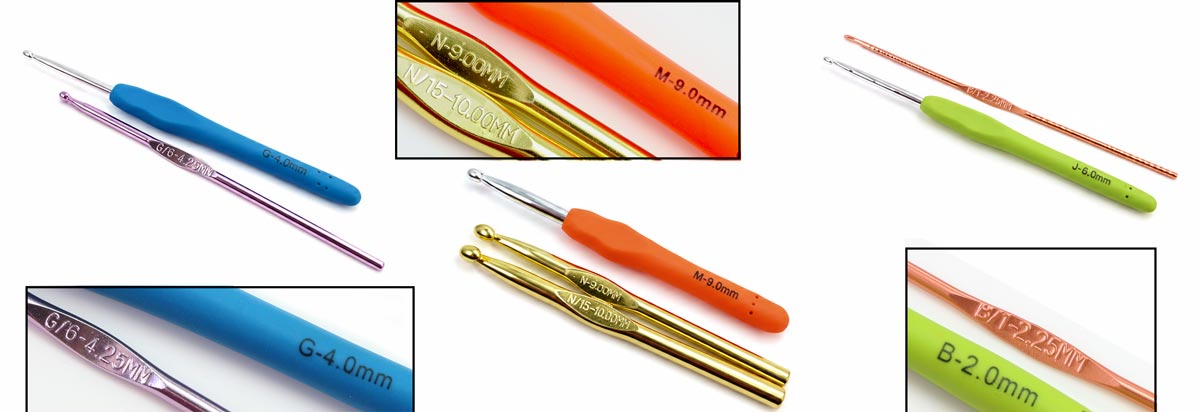
Notice in the image below that crochet hook letter sizes have not always been standardized. Hooks with the same letter may be marked with different millimeter sizes depending on the manufacturer or the sizing system that was used.
For example, the two G hooks shown are different sizes. One is 4.0 mm and the other is 4.25 mm. While this small difference may not be noticeable on a small project, it can affect the finished size of larger projects.
The center group provides another example. Two hooks are marked N while one is marked M. However, the M hook and one of the N hooks are both 9.00 mm, while the other N hook is 10.00 mm.
Whenever possible, follow the millimeter (metric) size rather than the letter designation. Millimeter measurements are much more consistent and are the measurement most modern crochet patterns use.
| Hook Size Range | Often Used With | Typical Projects |
|---|---|---|
| Small steel hooks | Crochet thread and fine cotton | Doilies, lace, thread ornaments, edging |
| Small yarn hooks | Fine or sport weight yarn | Baby items, lightweight accessories, detailed stitches |
| Medium hooks | DK, worsted, and medium weight yarns | Scarves, hats, blankets, garments, general projects |
| Large hooks | Bulky and super bulky yarns | Chunky blankets, rugs, baskets, quick projects |
| Extra-large hooks | Very bulky yarn, fabric strips, rope, or specialty materials | Rag rugs, oversized blankets, home décor, novelty projects |
Types of Crochet Hooks
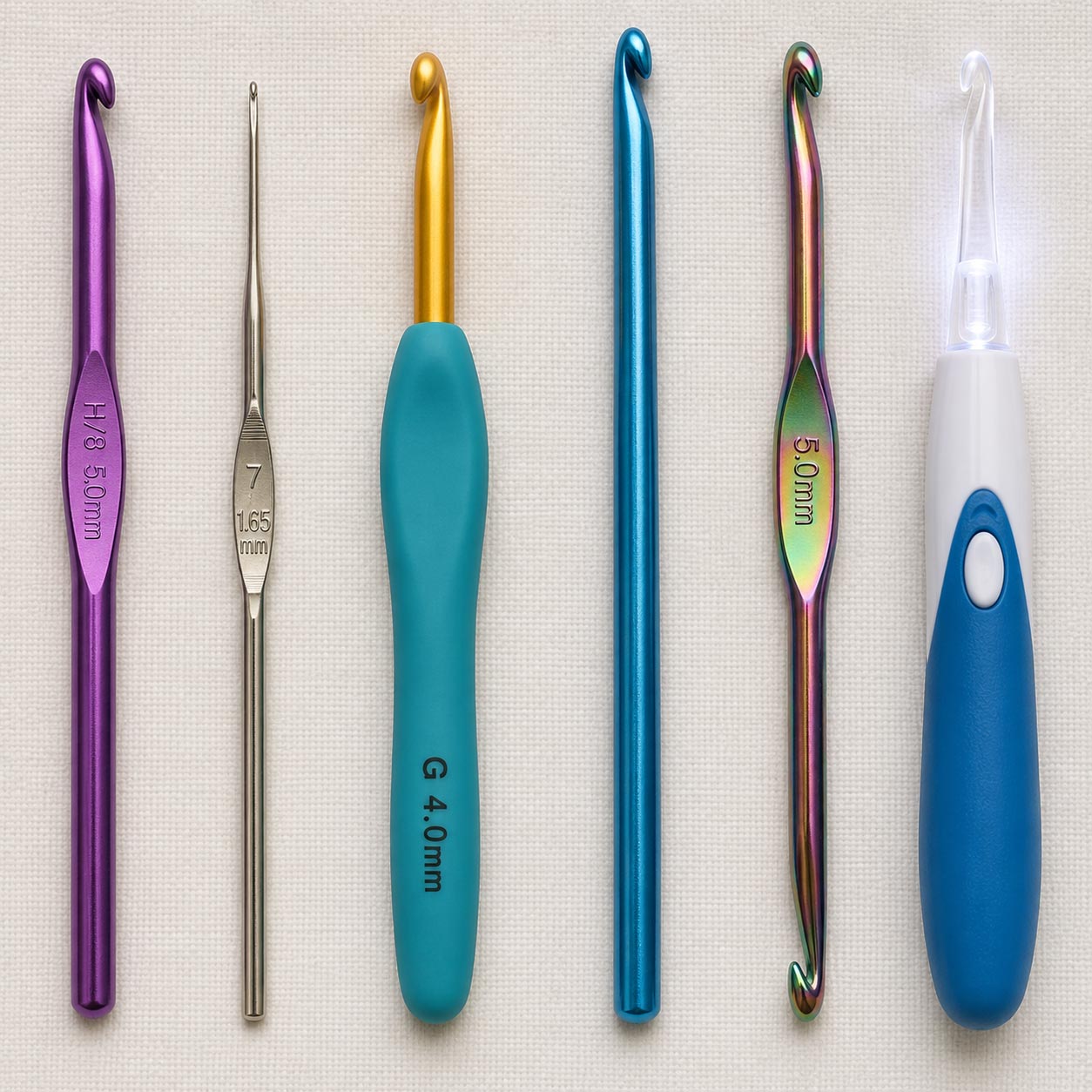
- Standard crochet hooks are used for most everyday crochet projects.
- Steel crochet hooks are very small hooks used mainly for thread crochet and lacework.
- Ergonomic hooks have larger handles designed to reduce hand strain and improve comfort.
- Tunisian crochet hooks are longer hooks used to hold multiple loops, somewhat like knitting needles.
- Double-ended hooks have a hook on both ends and are used for special crochet techniques.
- Lighted hooks include a small light near the hook tip to help with dark yarn or low-light conditions.
How Hook Size Affects Crochet
Hook size has a direct effect on the size and appearance of crochet stitches. A smaller hook makes tighter, firmer stitches, while a larger hook makes looser, softer stitches. This affects the drape, density, and size of the finished project. For items such as garments, hats, slippers, and fitted pieces, matching the pattern gauge is especially important. For projects like afghans gauge is not quite as important if the finished size isn't critical.
Changing crochet hook sizes can have a surprising effect on the finished size of a project. For example, when using a medium (worsted weight #4) yarn, a project crocheted with a Size H (5.0 mm) hook may produce approximately 18 to 20 single crochet stitches across a 4-inch swatch. Switching to a Size I (5.5 mm) hook with the same yarn and stitch often reduces that to around 16 to 18 stitches across the same distance. Although the difference seems small, it becomes much more noticeable over the width of a blanket, sweater, or afghan.
Because every crocheter's tension (the tightness with which you hold your yarn and feed it to your hook) is different, patterns often include a gauge measurement rather than simply telling you which hook to use. Making a small gauge swatch before beginning a project allows you to verify that your stitch count matches the pattern and helps ensure the finished item will be the intended size.
There is no single "correct" way to hold your hook, hold your yarn, or maintain tension while crocheting. Every crocheter develops a natural style that feels comfortable to them. Some naturally make stitches that are smaller and closer together, while others naturally make stitches that are larger and farther apart. Crocheters often describe these as tight stitches (smaller stitches) and loose stitches (larger stitches). Neither is right or wrong, as long as your finished gauge matches the pattern.
If your stitches are naturally smaller than the pattern calls for, using a larger crochet hook allows each stitch to become slightly larger, helping you match the pattern's gauge. If your stitches are naturally larger than the pattern calls for, using a smaller hook makes each stitch slightly smaller. Rather than trying to force yourself to crochet differently, it is usually easier and more enjoyable to adjust your hook size until your natural crocheting style produces the same gauge as the pattern designer.
To see why this matters, imagine crocheting a baby blanket that should finish at 36 inches wide. If your stitches are only a little smaller than the pattern intended, the finished blanket might measure only 32 or 33 inches wide. If your stitches are a little larger than intended, the blanket could grow to 39 or 40 inches wide. Spending just a few minutes making a gauge swatch before beginning can save hours of work and help ensure your finished project turns out the correct size.
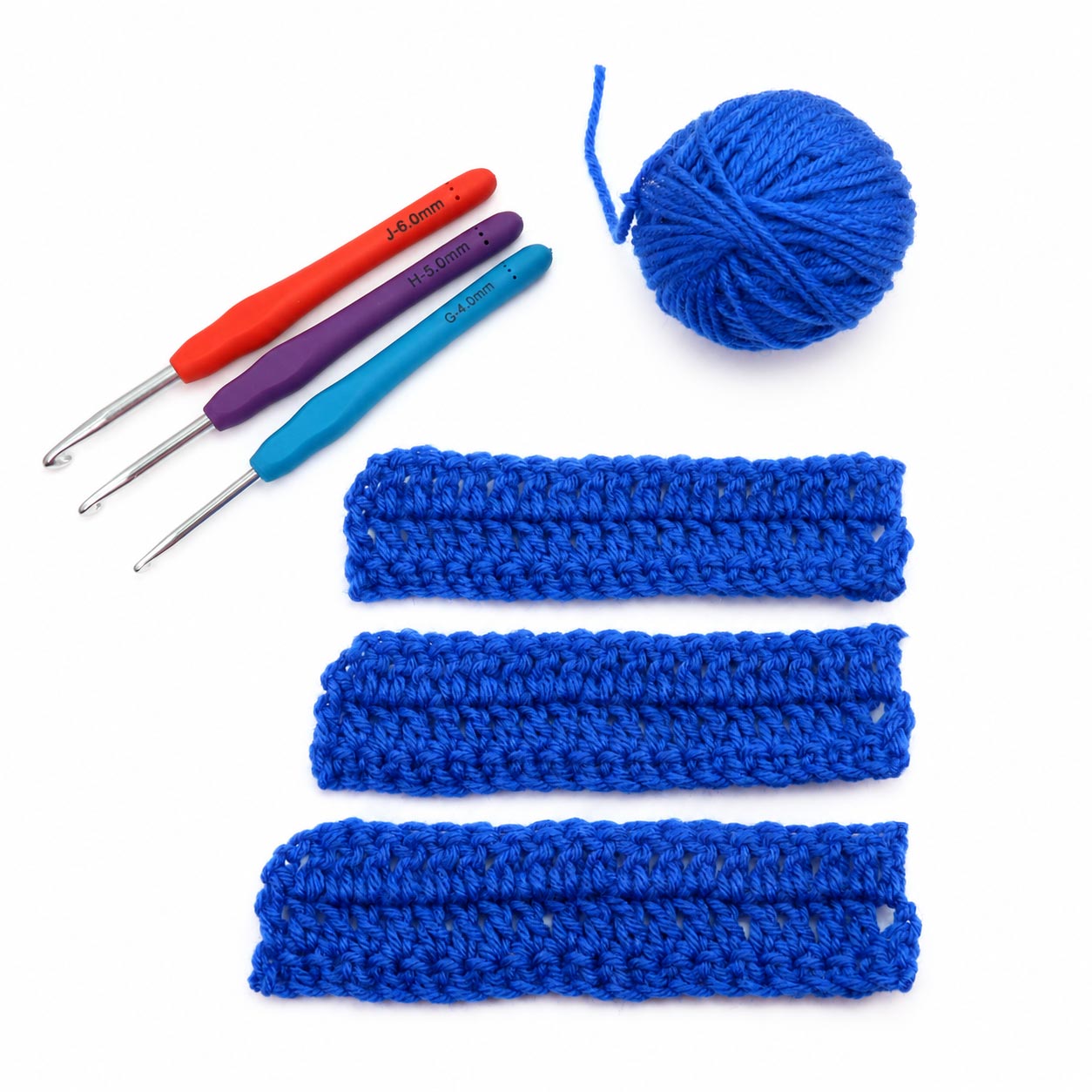
Each swatch shown contains exactly 20 stitches worked with the same exact ball of yarn. The only difference is the size of the crochet hook that was used. The top swatch was crocheted with a 4.0 mm hook, the middle swatch with a 5.0 mm hook, and the bottom swatch with a 6.0 mm hook.
Notice how the swatches become progressively wider and the stitches appear more open as the hook size increases. And though it isn't too visible with just 3 rows of stitches, it is also getting taller. A smaller hook creates smaller, tighter stitches, while a larger hook creates larger, looser stitches. Even though every swatch contains the same number of stitches, the finished size changes simply because the hook size changed.
This is why crochet patterns specify both a recommended hook size and a gauge. If your stitches are naturally tighter or looser than the pattern designer's, you can often achieve the correct finished size by changing to a smaller or larger hook rather than changing the way you crochet. There is no single "correct" tension—the goal is to choose the hook size that allows your natural crochet style to match the pattern's gauge.
Crochet Hooks Are More Than Just a Crochet Tool
Although designed for crocheting, crochet hooks have found their way into many other crafts and hobbies. Their small hooked tip makes them excellent tools for pulling, retrieving, positioning, and guiding thread, cord, wire, and other materials through tight spaces. Many experienced crafters keep an extra crochet hook in their sewing basket or toolbox simply because it often solves problems that other tools cannot.
- Bead Stringing & Jewelry Making
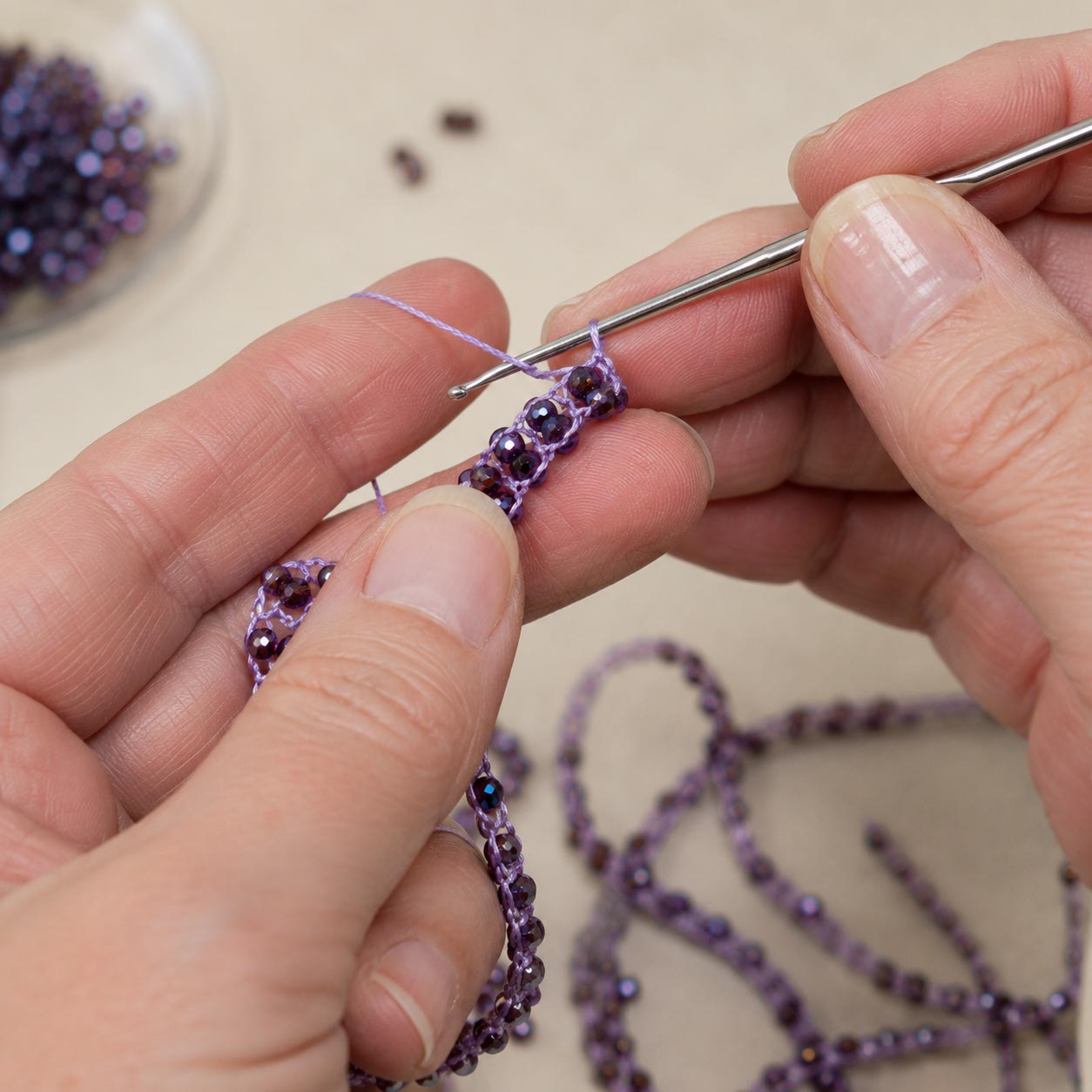
- Crochet hooks are useful for pulling cord, ribbon, elastic, and thread through large-hole beads. Fine steel crochet hooks are especially handy for retrieving thread that has slipped inside a bead, untangling necklaces, guiding stringing materials through tight openings, and assisting with bead crochet projects.
- Knitting
- Knitters frequently use crochet hooks to rescue dropped stitches, repair mistakes several rows below the working row, pick up edge stitches, add decorative crochet borders, and bind off certain projects. Many knitters keep at least one crochet hook with their knitting supplies.
- Sewing
- In sewing, crochet hooks are helpful for pulling elastic through waistbands and sleeves, threading drawstrings, turning narrow fabric tubes such as belt loops and doll straps, and retrieving loose threads in hard-to-reach places.
- Plastic Canvas
- Crochet hooks can assist with lacing plastic canvas, especially around tight corners or difficult openings. They are also useful for repairing missed stitches and pulling yarn through areas that are difficult to reach with a plastic canvas needle.
- Macramé
- Macramé artists often use crochet hooks to pull cord ends through tight knots, retrieve hidden cord tails, and help weave decorative wraps into finished projects.
- Tatting
- Many shuttle tatters use a fine steel crochet hook to join picots, making the joining process quicker and more precise than using fingers alone.
- Doll & Stuffed Animal Making
- Crochet hooks are excellent for positioning polyester fiberfill inside narrow arms, legs, and other small openings. They can also help turn small fabric pieces right side out and guide joints or limbs into position during assembly.
- Latch Hook & Rug Making
- Rug makers often keep a crochet hook nearby for correcting missed loops, retrieving yarn, repairing edges, and making small adjustments without disturbing the surrounding work.
- Embroidery
- Very fine steel crochet hooks can be useful for retrieving threads, loosening knots, correcting pulled stitches, and assisting with delicate embroidery repairs.
- Floral Arrangements
- Florists and wreath makers sometimes use crochet hooks to pull ribbon or decorative wire through arrangements, position embellishments, and adjust bows without damaging nearby materials.
- Fishing & Outdoor Uses
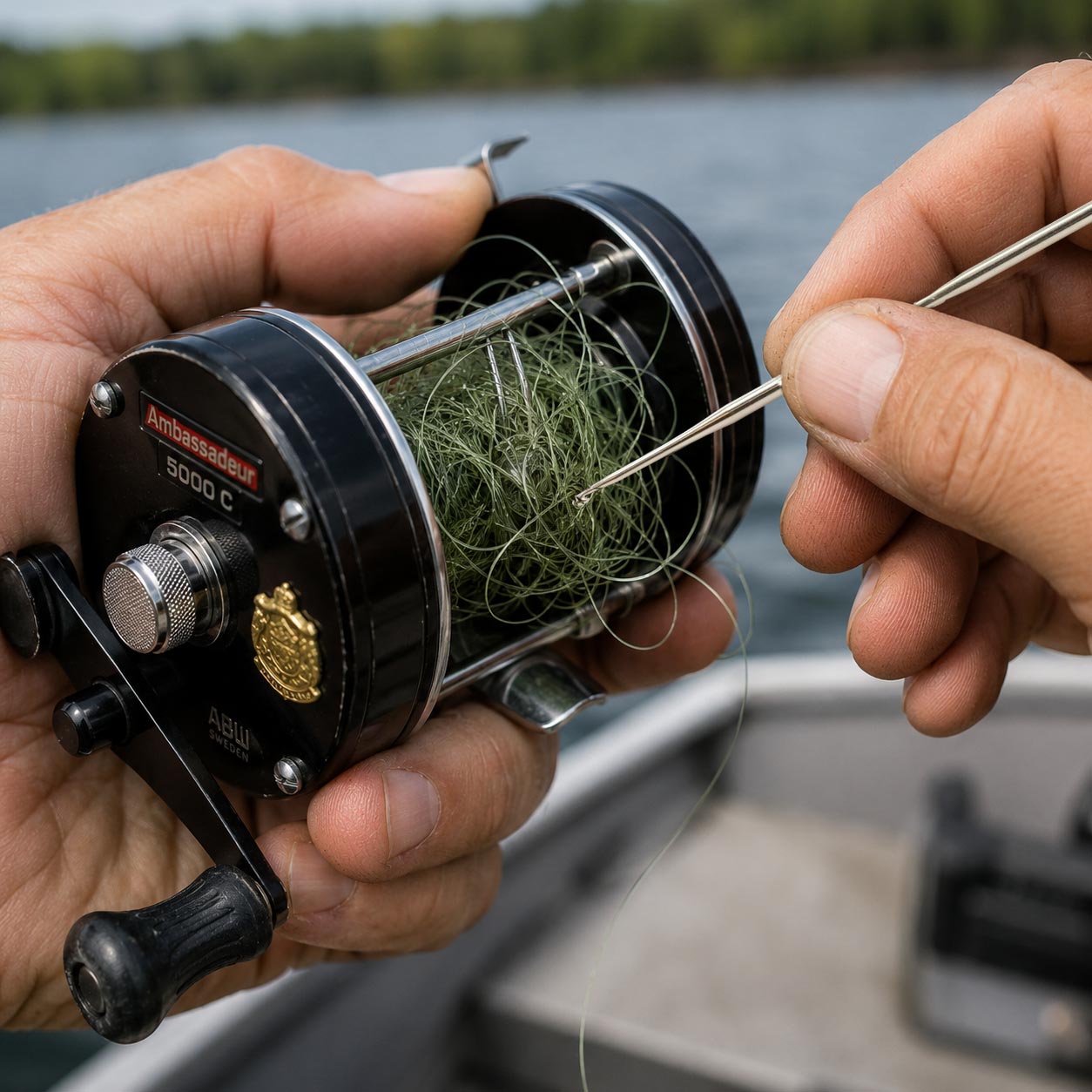
- Many anglers keep a small steel crochet hook in their tackle box. It can help untangle fishing line backlashes, retrieve loops in line, thread bait loops, and make small adjustments to fishing tackle. Because the hook is small and smooth, it can often separate tangled line without causing damage.
- Household Uses
- Crochet hooks often become handy household tools for retrieving dropped objects from narrow spaces, pulling cords through tubing, loosening stubborn knots, untangling jewelry chains, and fishing lightweight items from hard-to-reach places.
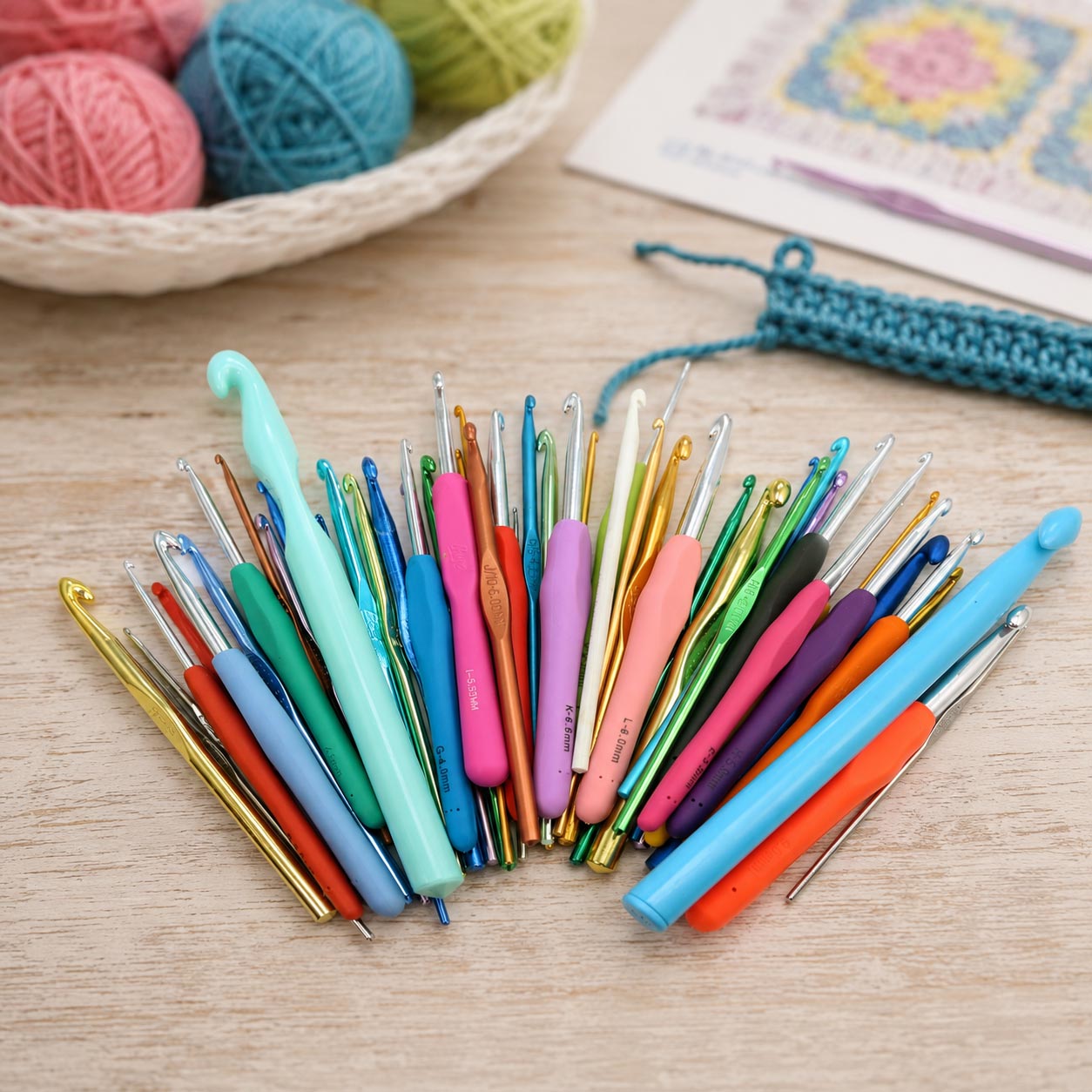
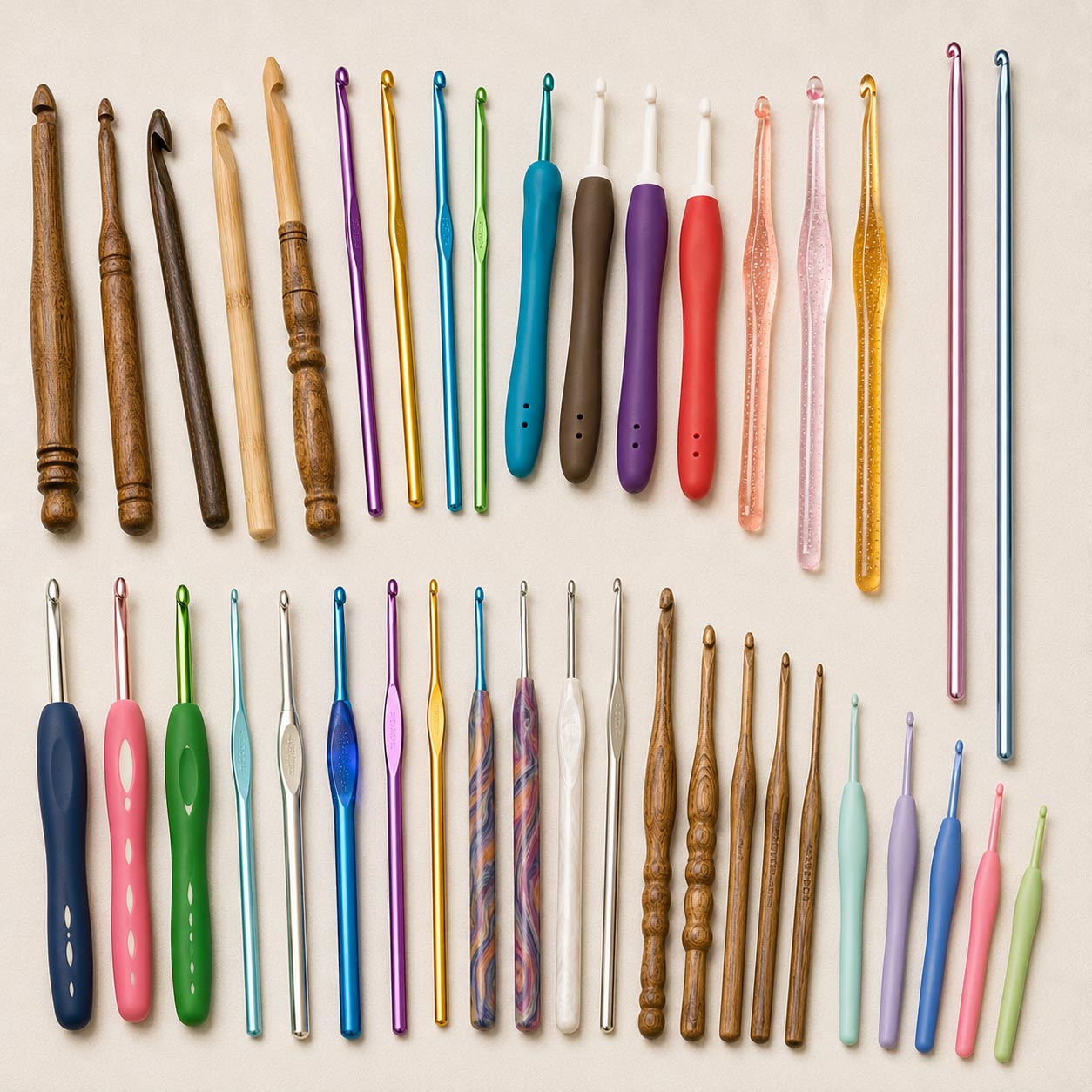
My Crochet Hooks
(less a few new Tunisian style hooks I haven't used yet)
Helpful Tips
- Check the millimeter size when comparing crochet hooks, especially between brands.
- If your stitches are too tight, try a slightly larger hook.
- If your stitches are too loose, try a slightly smaller hook.
- Use a hook that feels comfortable in your hand, especially for large projects.
- Keep notes when changing hook sizes so you can repeat the same results later.
- When using dark yarn, a light-colored hook can make stitches easier to see.
Did You Know?
Steel crochet hooks use a different size system than many yarn hooks. With many steel hooks, the larger the number, the smaller the hook. This can be confusing because yarn hook sizes often work the opposite way, with larger letters or numbers usually indicating larger hooks.
A Little Crochet Hook History
Crochet as a recognizable craft became especially popular in Europe during the 1800s, although looped and hooked textile techniques existed earlier in various forms. Early crochet hooks were made from materials such as bone, wood, ivory, steel, and handmade metal. As crochet became more widely practiced, hooks became easier to manufacture and were eventually produced in standardized sizes for different yarns and threads.
Today, crochet hooks are available in a wide range of materials and styles, from traditional steel thread hooks to modern ergonomic hooks designed for comfort during long crafting sessions.